


Follow Us


Design-build remodeling in Chicagoland since 2006
Home → Blog → Kitchen Bump-Out Addition: 5 Times It Makes Sense
Updated October 27, 2026
Is a kitchen bump-out addition right for you? See five situations where a small bump-out beats a full addition, from galley kitchens to tight lots.

Marc Santarromana
In this article
Quick answers What is a kitchen bump-out? 1. When you want to fix a galley kitchen 2. When your lot is limited 3. When you want to limit the size of the project 4. When you can also use space inside the house 5. When other rooms could use the room too When is a bump-out not enough? What should you ask before you decide? How long does it take? Kitchen bump-out questionsA kitchen bump-out addition adds a few feet to one side of your kitchen without building a whole new room. It’s the right answer when your kitchen is close to working and just needs a little more space, and the wrong answer when the problem is bigger than a few feet can fix. Here are five situations where a bump-out makes sense, and how to tell if yours is one of them.
What is a bump-out? A small extension, usually a few feet, that pushes one exterior wall outward.
When does it make sense? When a little more room would fix your layout.
What does it depend on? How your house is framed, how far you want to extend, and what your lot allows.
Is it always cheaper than an addition? A small one usually costs less than a large addition, but it’s still a structural project.
It’s a limited addition that extends one wall of the kitchen outward, giving you more floor area without a full room addition. Depending on how far it projects and how your house is built, it may be supported by its own foundation or extend out from the existing floor framing. Your architect works that out, so don’t assume either one until the design is done.

A bump-out addition that gave this dining room extra space.
A galley kitchen is a corridor with counters on both sides, and it can feel tight when two people cook. A bump-out on one side gives you room to rethink the plan. It could turn the galley into an L-shape, or make space for a peninsula or island. Our guide to kitchen layout types shows how those shapes work.

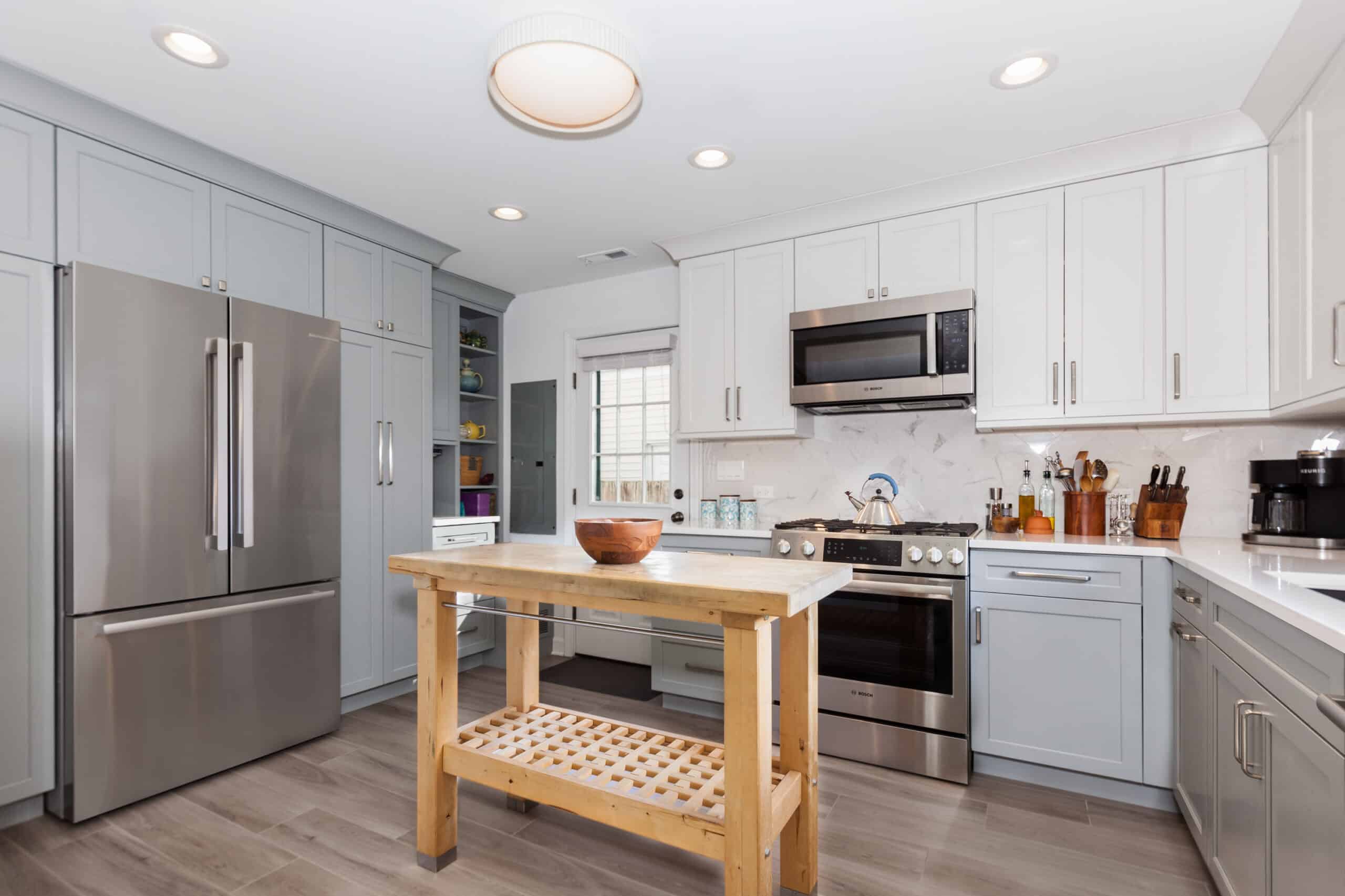
A galley kitchen before and after its remodel.
If your yard is small, you may not want a big addition eating into it. A bump-out uses much less of the lot than a full room, and it adds floor space exactly where the kitchen needs it. Ask early how much room your lot gives you.
A smaller footprint usually means less to build. A small bump-out generally costs less than a large ground-level or second-story addition, though it still involves structure, framing, and finishes. Your final price depends on your design, how far it extends, and your selections, and it can change if your plans or material costs change. You get an itemized estimate once your design is final. Our kitchen remodel cost guide explains what moves a kitchen budget.

Even a small addition involves new structure and framing.
Sometimes the best answer is a mix. You might borrow space from an adjacent dining room or closet, then add a bump-out for the last few feet. Combining the two can give you the layout you want without a bigger project than you need. In the 2025 U.S. Houzz Kitchen Trends Study of 1,620 homeowners, 35% increased their kitchen’s footprint, so you’d be in good company.

Opening the kitchen to the next room can add space without building out.
A bump-out doesn’t have to stop at the kitchen. If a dining room, family room, or office shares the same exterior wall, you might extend them together. Some homeowners also look at the space above. Planning the whole wall at once can be more efficient than doing separate projects later.

A family room addition with built-in shelving.
If you need a lot more space, or the kitchen needs to move to a different part of the house, a larger addition or a layout change inside may fit better. Our remodel or move guide can help if you’re weighing bigger options.

When you need much more space, a larger addition may be the better fit.
How far can it extend on my house?
Will it need its own foundation?
What happens to the roof and exterior walls?
How will the new space blend with what’s there?
Our home additions page shows what we build.
It depends on the size of the bump-out and your design. Your project manager confirms the schedule once the design is final. A full kitchen remodel typically takes about 8 to 12 weeks with us.
It’s a small kind of addition.
It depends on your house and your lot.
A good design makes it blend in.
Tell us what you’d like more space for, and we’ll talk through your options.
↳ Schedule a Free ConsultationConsultation
"*" indicates required fields
Mon – Fri:
Sat:
Sun:
9 AM – 5 PM
By Appointment Only
Closed
Hours