Tub or Shower in a Bathroom Remodel: How to Decide
Tub or Shower in a Bathroom Remodel: How to Decide
Decide by how your household actually bathes, not by what looks good in a photo. When did you last take a bath? Be honest. If the answer is “I can’t remember,” that’s the most useful thing you can know before you remodel. Plenty of people keep a tub out of habit and give up space they’d rather spend on a better shower. Others would miss the tub badly.
Quick answers
- Keep the tub if someone uses it, even occasionally.
- Swap it for a bigger shower if nobody does.
- Add a freestanding soaker only if you have the floor space and you’ll really use it.
- If it’s the only tub in the house, think twice before removing it.
Who in your house actually uses the tub?
Start with the people, not the plumbing. Young kids and pets are easier to wash in a tub. Someone with sore muscles may love a long soak. A couple who showers every morning and hasn’t touched the tub in years may be sitting on wasted space. Count honestly, then decide.
If this is the only tub in your home, pause. Some households need one for small children or pets, and some buyers like having one. We can’t promise how it affects resale, because that depends on your home and your market, so it’s worth asking a local real estate agent too.
What can you do with the space?
You have more options than keep or remove.
- Keep a tub-shower combination in the same spot. It’s efficient and works well in a hall bath.
- Replace the tub with a walk-in shower, so the shower gets the space.
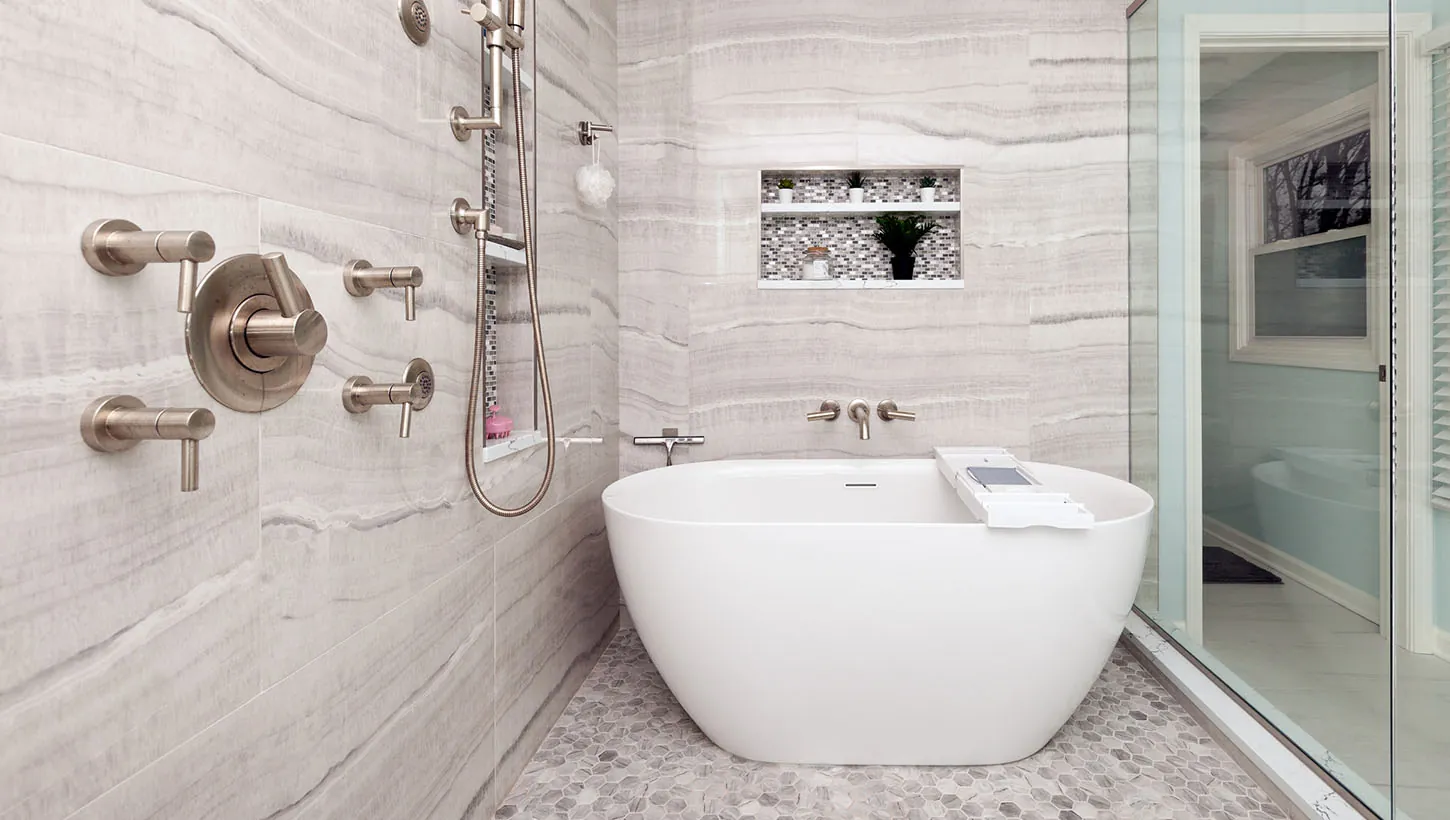
- Add a freestanding tub and keep a separate shower, if the room is big enough for both.
- Keep the tub and refresh it with new tile, fixtures, and a better surround.
Many homeowners choose the shower. Houzz’s 2026 bathroom study surveyed 1,619 U.S. homeowners and found that when a tub came out, 79% used the freed space for a bigger shower. Still, 72% of those who added or replaced a tub chose a soaker, so tubs are far from disappearing.
What does each choice involve?
A tub-shower combination
It’s the simplest to build. You can add a handheld shower and swap the curtain for a glass panel, and the layout often stays the same.
A walk-in shower
It asks more of the build. The floor and walls need careful waterproofing, the drain may move, and you’ll choose between glass types and how the entry works. A lower entry can be easier to step into. Glass looks open but takes a squeegee and some upkeep.
A freestanding tub
It needs floor space around it, and plumbing that may have to move. A tub full of water is heavy, so ask your contractor whether the floor needs reinforcing for the one you pick.
Both a tub and a shower
A separate tub and shower takes room. It usually belongs in a primary bathroom, not a small hall bath. For ideas, see 9 ideas for a luxurious bathroom remodel and designing the perfect primary suite.
Five questions to ask before you decide
- Who uses the tub, and how often?
- Is it the only tub in the house?
- How much floor space do you have, and what else could it hold?
- Would you rather clean glass, or a tub and surround?
- Do you plan to stay, or sell soon?
How long does it take, and what does it cost?
A primary bathroom typically takes about 8–12 weeks with us, and a guest bathroom about 4–6. Your project manager confirms the schedule once the design is final.
No single price fits every bathroom. Moving plumbing, how the shower is built and waterproofed, the tile, the fixtures, and what’s found behind the walls all move the total. Prices can change when your scope or selections change, or when material costs shift. Many homeowners keep an extra 10–15% in reserve. See our bathroom remodel cost guide for the factors in more detail.
How do we handle a bathroom project?
We design it and we build it, with one team. See our bathroom remodeling page, our process, and design-build vs. general contractor. Planning a bathroom for guests? See guest accommodations in Chicagoland homes.
Tub or shower questions
Do I need a tub in my house?
No, but think about who might need one, now or later.
Can I keep my tub and still get a bigger shower?
Sometimes, depending on the size of the room. A designer can test it on a plan.
Does removing a tub change the plumbing?
Often, the drain and valve locations change, so ask early.
Ready to decide?
Bring a few photos and tell us how you bathe, and we’ll talk through what fits your room.
Schedule a Free Consultation
Consultation
"*" indicates required fields