
Follow Us



Home Additions → Sunroom vs. Three-Season Room vs. Screened Porch
Updated November 3, 2026
They can look alike from the driveway, but they work very differently once you’re living in them. Here’s how to tell them apart and pick the right one for your home.

Marc Santarromana

In this article
What is the difference? Which one is right for your home? Questions to ask before you choose Where a sunroom fits in a Chicago-area home Planning a sunroom or porch addition ↳ Sunroom and porch questionsA sunroom, a three-season room, and a screened porch can look alike from the driveway, but they work very differently once you’re living in them. The short version: a screened porch is open to the weather, a three-season room is enclosed for milder months, and a sunroom is built to be used most of the year.
Screened porch: Screens keep out bugs but not the weather. It’s the simplest of the three and feels the most like being outdoors.
Three-season room: Windows enclose the space, so it’s protected from wind and rain. It’s usually not built to be heated and cooled like the rest of your house, which is why it’s mostly used in spring, summer, and fall.
Sunroom (four-season): Built to be comfortable most of the year, with the insulation and climate control to match. It feels like another room of the house.
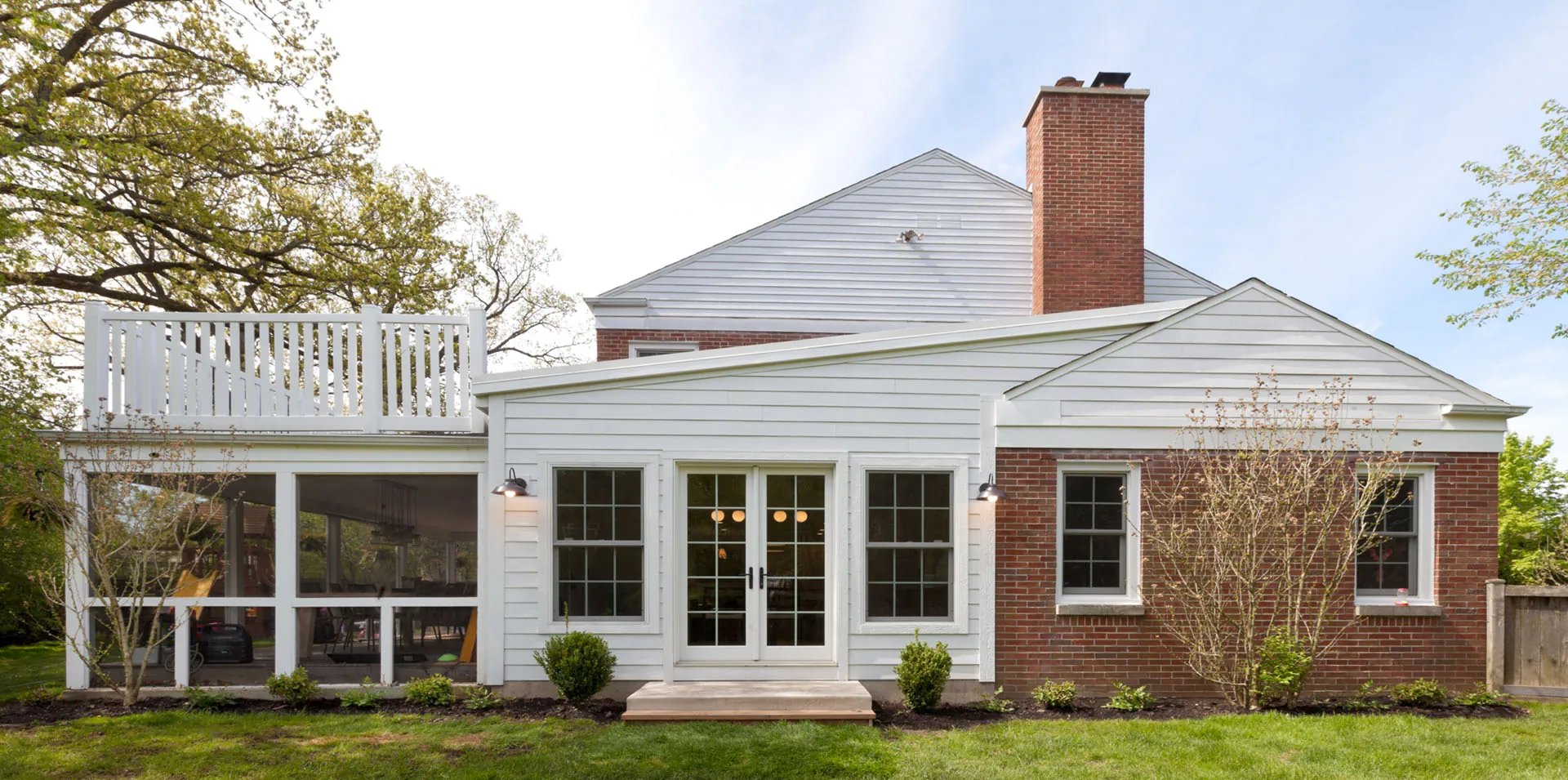
A two-story addition with a screened-in porch and rooftop deck by Design First Builders.
Start with how you want to use the space, not the name.
You want fresh air and the simplest option. A screened porch fits.
You want a bright space for most of the year, but not every winter day. A three-season room fits.
You want a space you can use in January. Choose a sunroom built for year-round use.
How will we use it? Morning coffee, a reading room, a play space, or a spot for plants all point to different choices.
Will it be heated and cooled? This changes how the room is built, so decide it at the start.
How much sun does that side of the house get? A room with a lot of glass can get hot in summer. Ask how the design handles it.
How will it connect to the house? Think about doors, the floor level, and how you’ll walk to it.
Does the style match our home? An addition should look like it belongs.
Chicago-area weather swings from hot summers to cold winters, so how you plan to use the room matters more than it would somewhere mild. A room you’ll use in winter needs to be designed for it from the start. A room for warm months can be simpler. Either way, it’s a home addition, and it works best when it’s planned with your floor plan and your yard.

A year-round sunroom addition with black-frame windows in Glen Ellyn, IL.
If you’re weighing options, we can help you think it through. Our team looks at how you use your home, the space you have, and how the new room will connect to the rest of the house. You can read about our home additions in Chicago, see the common home addition mistakes to avoid, or learn how a bigger space can start with a kitchen bump-out addition. To see how a project moves from idea to finished space, read Our Home Remodeling Process.
A three-season room is enclosed but usually not built to be heated and cooled like the rest of the house. A sunroom is built for comfortable use most of the year.
No. A screened porch has screens that keep out bugs but not weather. A three-season room has windows, so it’s protected from wind and rain.
It depends on how it’s built. A sunroom designed for year-round use can be comfortable in winter. A three-season room usually isn’t meant for cold months.
Start with how you want to use the space. Choose a screened porch for fresh air and simplicity, and a sunroom if you want a room you can use most of the year.
Tell us what you’d like to add, and we’ll help you decide where to begin.
↳ Schedule a Free ConsultationConsultation
"*" indicates required fields
Mon – Fri:
Sat:
Sun:
9 AM – 5 PM
By Appointment Only
Closed
Hours