


Follow Us


Design-build remodeling in Chicagoland since 2006
Home → Blog → Winter Home Remodeling in Chicagoland (2026)
Updated October 23, 2026
Winter home remodeling in Chicagoland: see which projects to plan this November, from kitchens to basements, and what to ask before you start.

Marc Santarromana
In this article
Winter Home Remodeling in Chicagoland: Projects to Plan This November Key Takeaways Is winter a good time to remodel your home? Kitchen remodeling in winter: what to plan Bathroom remodeling in winter: create a spa-like retreat Basement finishing in winter: add space without adding on Home additions: plan now, build when the weather allows Custom home building: start with design Energy efficiency: a winter upgrade that can lower your bills What is the remodeling process, step by step? What questions should you ask before starting a remodel? Frequently asked questionsWinter home remodeling works best for indoor projects like kitchens, bathrooms, and basements, and November is a smart time to start planning them. Design, selections, and permits take weeks, so homeowners who plan now can be ready to build when the schedule opens up. This guide covers which projects fit winter, what to expect, and what to ask before you start.
Indoor projects like kitchens, bathrooms, and basements can move forward in winter.
Design, material selections, and permits take time, so starting in November can put you ahead.
Exterior work and additions depend more on the weather, but the planning stage can start now.
An energy upgrade like air sealing and insulation can lower your heating costs.
Ask about timeline, budget, and living arrangements before you begin.
Yes, for indoor projects. Winter is a good time to remodel inside your home, and it’s an even better time to plan. Here’s why November works well.
Before construction begins, a project goes through design, material selection, and permitting. That can take weeks or even months. If you start in November, your plans can be ready by the time spring scheduling fills up.
Some contractors have more open schedules in the slower season, so ask about availability when you call.
Kitchens, bathrooms, and basements are inside your home, so the weather matters less. Exterior work, like additions and roofing, depends more on conditions, but the design and permit phases can start any time.
A kitchen is one of the best winter remodeling projects, especially if you want it ready for the holidays or for spring. The average kitchen remodel in Chicago takes about 8–12 weeks, so starting in November can mean a finish in late winter or early spring. Every timeline depends on design, permits, and material lead times. See our Chicago kitchen remodel cost guide for what affects the price.

A white kitchen remodel with island seating.
If you’re choosing finishes, the 2026 U.S. Houzz Kitchen Trends Study (1,780 Houzz users, published January 2026) found that wood is now the top cabinet color (29%), just ahead of white (28%), and off-white is the most popular wall color (29%). Learn more about custom cabinets and open vs. closed kitchen layouts.
A bathroom remodel is a good winter project because it’s contained, indoors, and ready for use sooner than most projects. There are two common ways to approach it.
Primary bath upgrades. Popular features include a double vanity, a freestanding tub, and a walk-in shower with extra features. Layout, ventilation, and plumbing should be planned early.
Guest and hall bath updates. A refresh of the vanity, tile, lighting, and fixtures can make a big difference without changing the layout.

A spa-like primary bathroom in Naperville.
See our bathroom remodeling projects for ideas.
Finishing a basement can add usable living space inside your existing footprint, so it’s a good fit for winter. Popular uses include a family room, a guest suite, a home office, a gym, or a game room. Before you start, your team should check moisture, insulation, ceiling height, and egress, because basements in Chicagoland can be damp. See our basement remodeling page.

A finished basement with built-ins and seating.
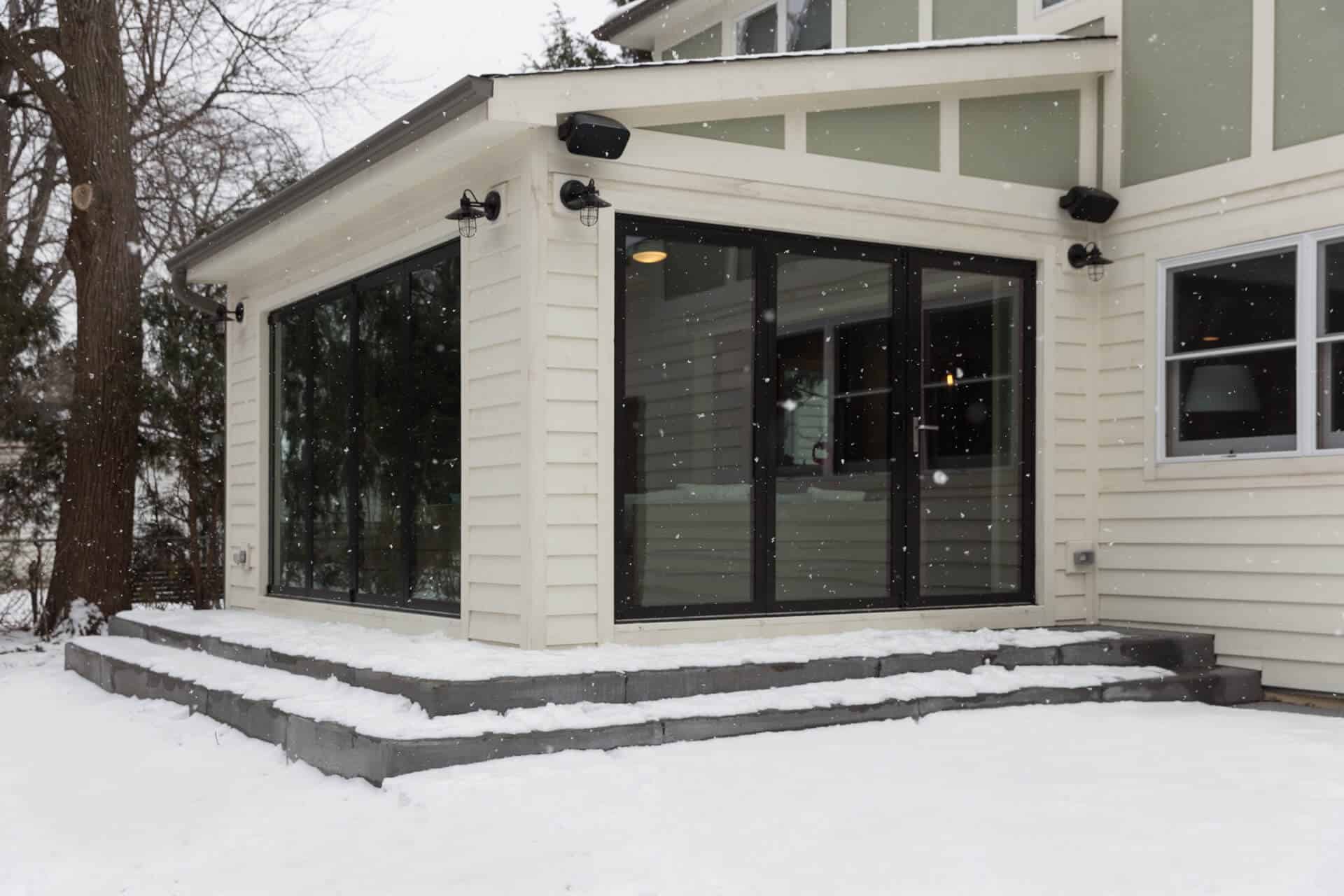
Winter is a good time to design and permit a home addition, even if construction starts later. Exterior work is more weather-dependent, so planning in November can have your project ready to go when conditions improve. Common additions include bump-outs, family room additions, second stories, sunrooms, garage additions, and mudrooms.

A finished addition with a screened porch.
To learn more, read about a family room addition, when a bump-out makes sense, and full vs. partial second stories. See our home additions page too.
A custom home is a long project, and the design phase is a good one to begin in winter. The timeline from design to move-in depends on the size, site, and permits. Ask us for a timeline based on your project. With design-build, the same team handles design and construction, so planning and cost stay connected. Learn more about custom homes and design-build vs. general contractor.
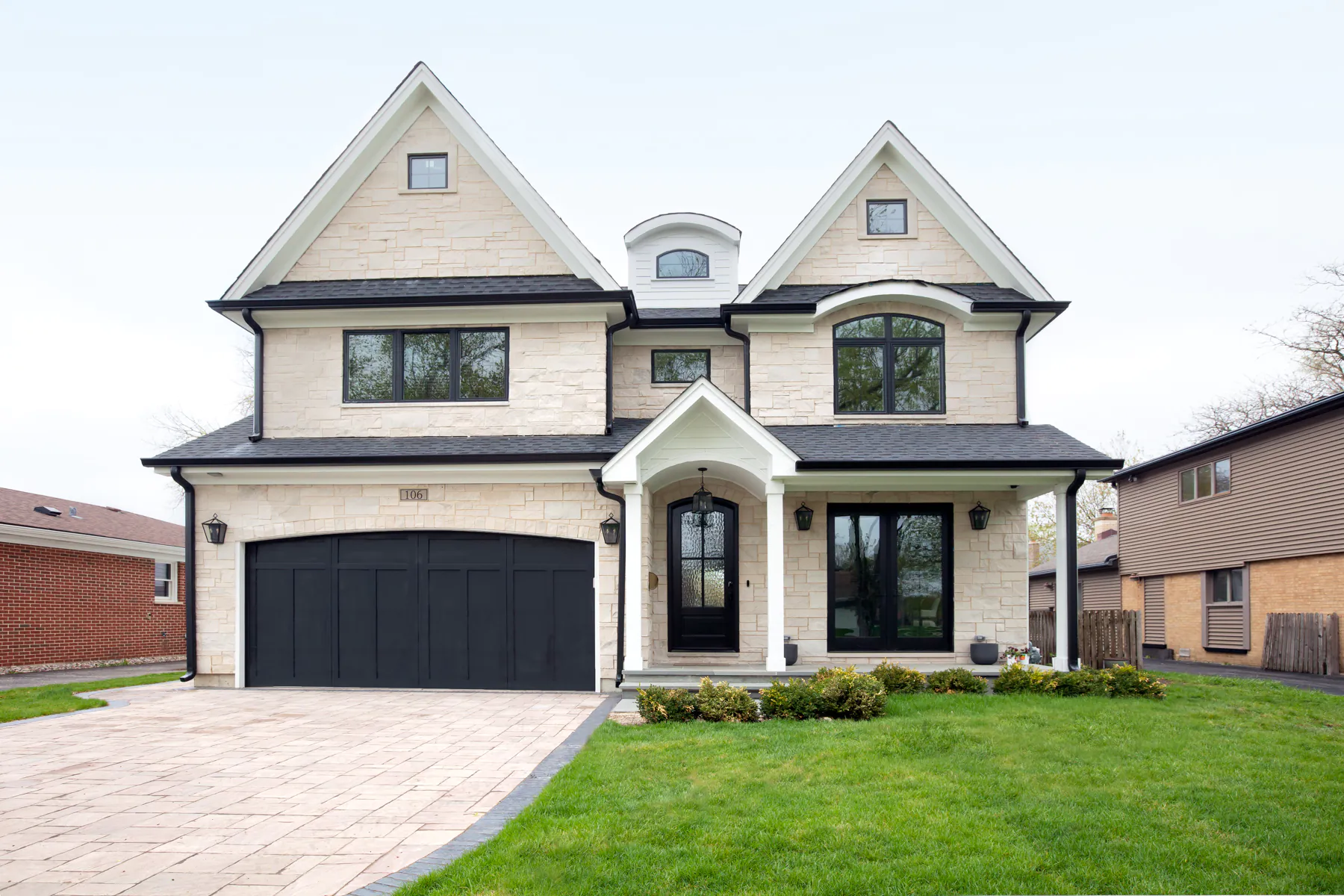
A custom home built by Design First Builders.
Air sealing and insulation are some of the most useful upgrades in a cold climate. According to ENERGY STAR, sealing air leaks and adding insulation can provide up to a 10% savings on annual energy bills. Areas to consider include your attic, basement, and the trim around windows and doors. If you’re already remodeling a kitchen, bath, or basement, it’s a good time to ask about insulation and air sealing, since walls may be open.
High-performance windows and doors can also help keep heat in. Ask your designer what makes sense for your home.
The process moves from conversation to design to construction. Here’s what to expect.
Initial consultation. We visit your home, talk through your goals, and look at your space.
Design development. Your plans take shape, with layouts and details reviewed with you.
Material selection. You choose cabinets, tile, fixtures, and finishes.
Construction and project management. A dedicated project manager coordinates the work.
Final walkthrough. We review the finished project with you.
Learn more about our process.
Ask about budget, timeline, and how you’ll live during the project. A few to start with:
Budget and financing: What’s included in the quote? Should I set aside a 10–15% buffer?
Timeline and living arrangements: How long will it take? Which days will be loudest, and when will utilities be off?
Must-haves vs. nice-to-haves: What matters most, so we can decide where to spend and where to save?
For more on what to avoid, read 9 home remodeling mistakes homeowners make and our guide to how to vet a contractor.
Yes. Indoor projects like kitchens, bathrooms, and basements can continue through the winter. Exterior work depends more on the weather, but design and permits can start anytime.
Indoor projects: kitchens, bathrooms, basements, and interior updates. Additions and custom homes are also good to plan in winter, even if construction starts later.
The average kitchen remodel in Chicago takes about 8–12 weeks. Design, permits, and material lead times all affect the timeline.
Not necessarily. Prices depend on the project, materials, and what’s included in the quote. Some contractors have more open schedules in winter, so ask about availability.
If you want to build in late winter or spring, yes. Design, selections, and permits take time, and starting in November can put you ahead.
At your first meeting, our team comes to your home, talks through your goals, and walks you through your options.
↳ Schedule a Free ConsultationConsultation
"*" indicates required fields
Mon – Fri:
Sat:
Sun:
9 AM – 5 PM
By Appointment Only
Closed
Hours